Uncategorized

The Novelty Threshold and the Collapse of Institutional Trust: When Confidence in Expertise Becomes the Risk
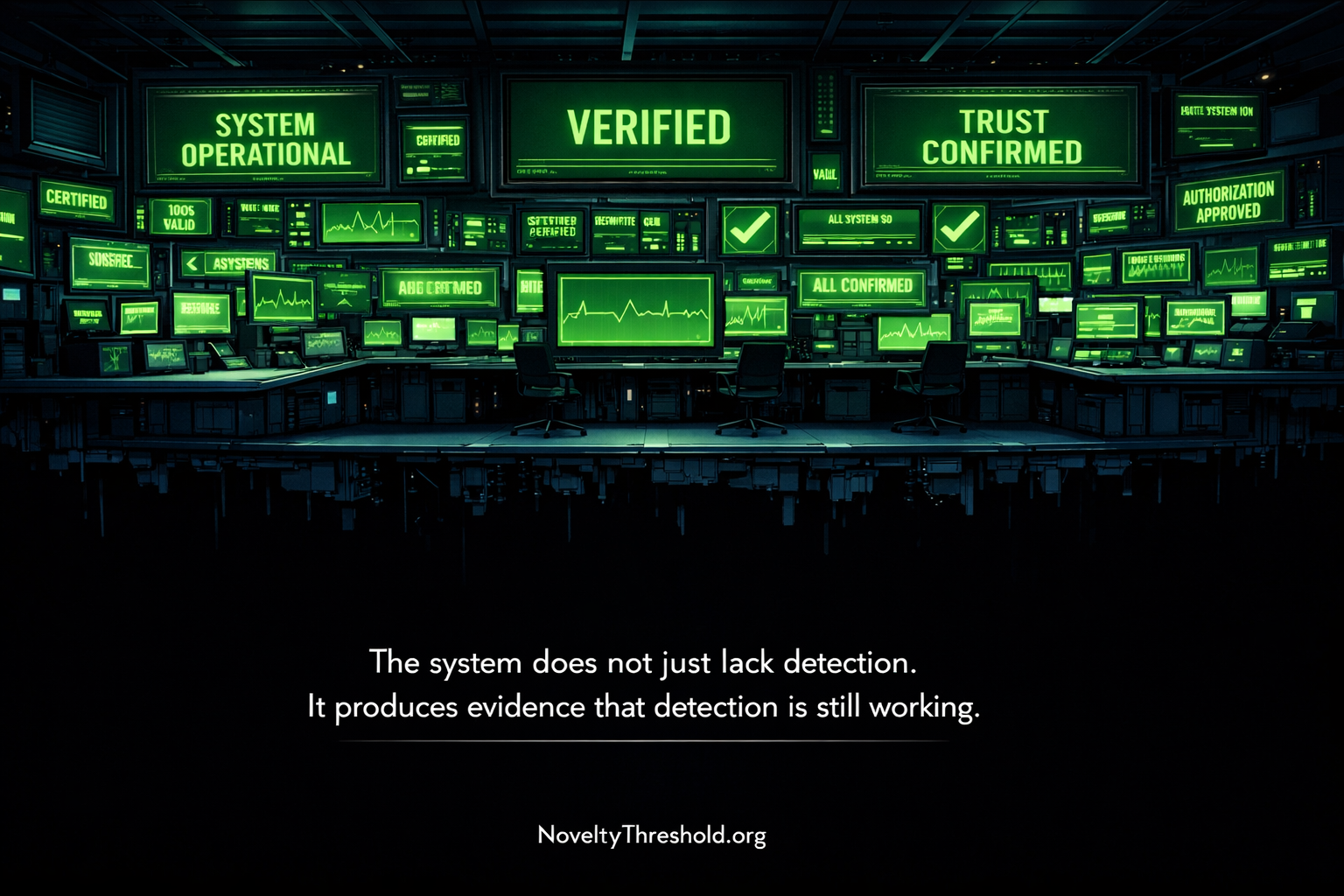
Institutional control room confirming trust with all green signals — floating above pure void, no ground beneath

Institutional trust is not a feeling. It is a structural assumption. When a patient accepts a diagnosis, when a court accepts expert testimony, when a regulator approves a financial instrument, when a commander acts on intelligence — the trust that makes these actions possible is not blind. It is grounded in a specific structural assumption: The Novelty Threshold and the Collapse of Institutional Trust: When Confidence in Expertise Becomes the Risk
The Novelty Threshold and the Reconstruction Requirement: The Only Two Concepts That Define the Same Era

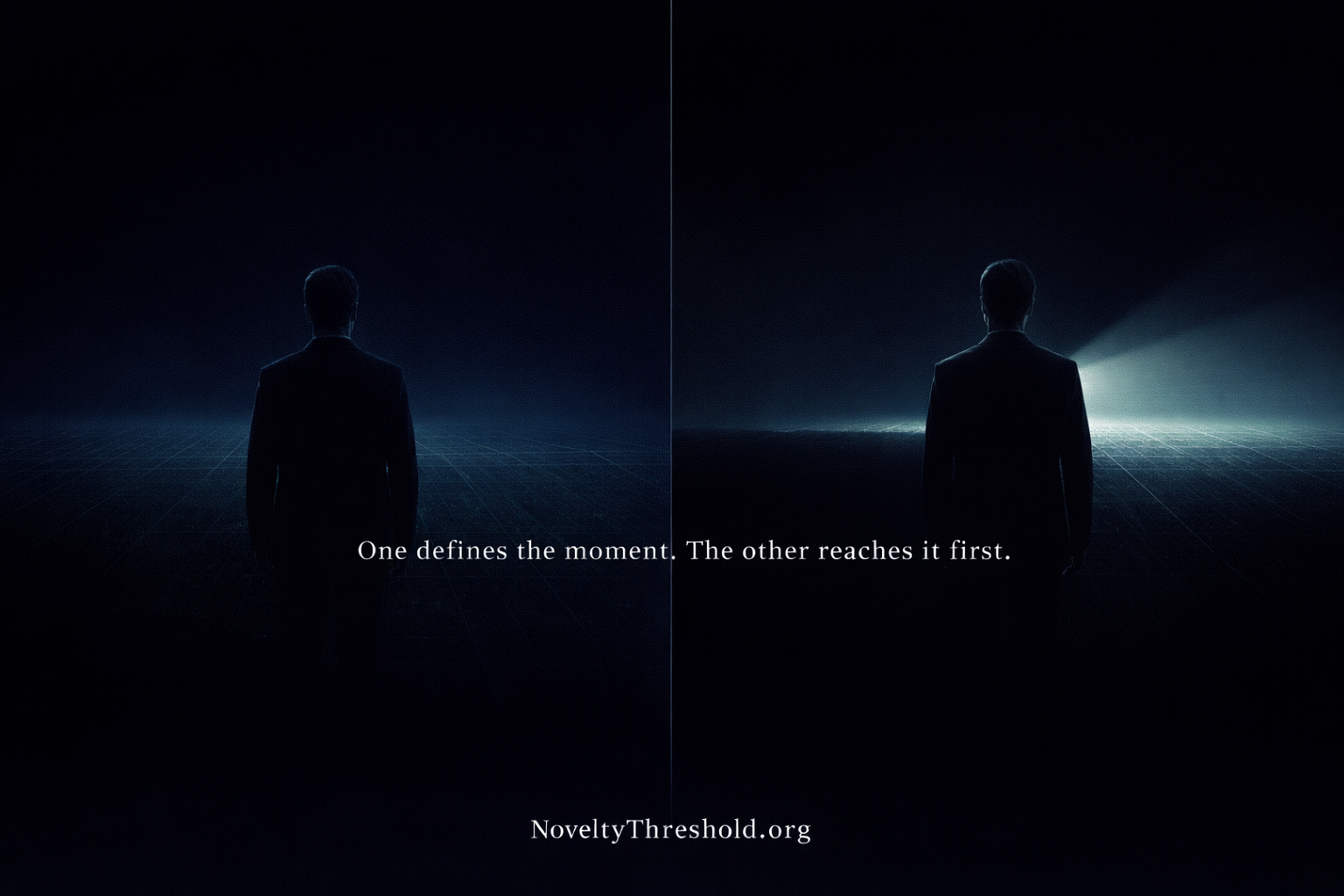
Two figures at the boundary — the Novelty Threshold approached without warning, the Reconstruction Requirement reaching it first

There is a specific relationship between two concepts that has never been made explicit — and the absence of that explicitness has left both concepts incomplete. The Novelty Threshold defines the moment when structural comprehension is required for the first time. Not assumed. Not approximated. Actually required — by the situation itself, by the divergence The Novelty Threshold and the Reconstruction Requirement: The Only Two Concepts That Define the Same Era

The Novelty Threshold in Financial Risk: Why the Next Crisis Will Be Confirmed as Safe Until the Moment It Isn’t

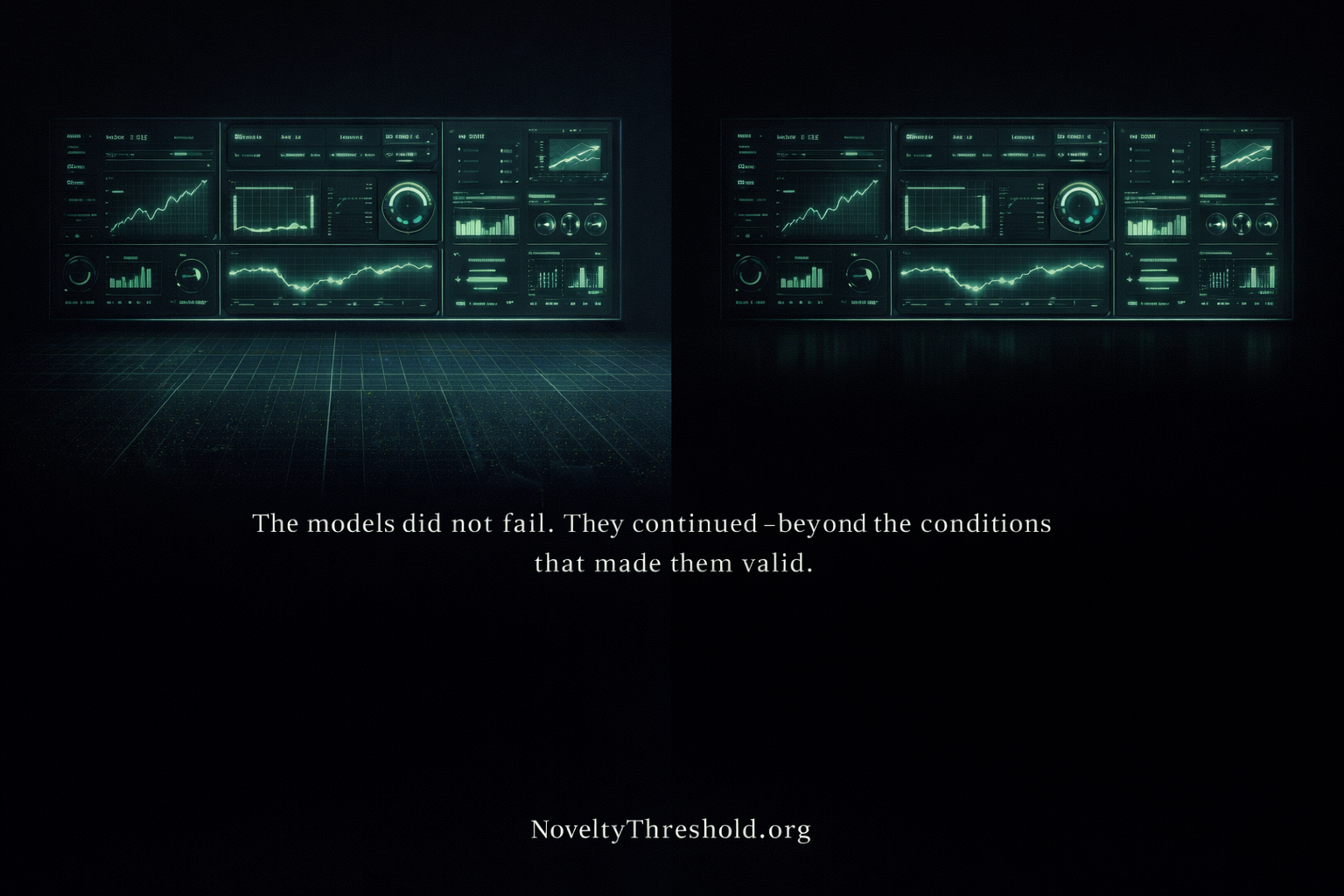
AI-assisted financial risk models confirming safety on both sides of a hidden boundary, with one side grounded and the other extending into a void beyond the distribution

Financial crises are not the result of failed risk analysis. They are the result of risk analysis functioning correctly within a distribution that has already ended. This distinction — between analysis that fails and analysis that continues correctly beyond the conditions that made it valid — is the most important thing that has never been The Novelty Threshold in Financial Risk: Why the Next Crisis Will Be Confirmed as Safe Until the Moment It Isn’t

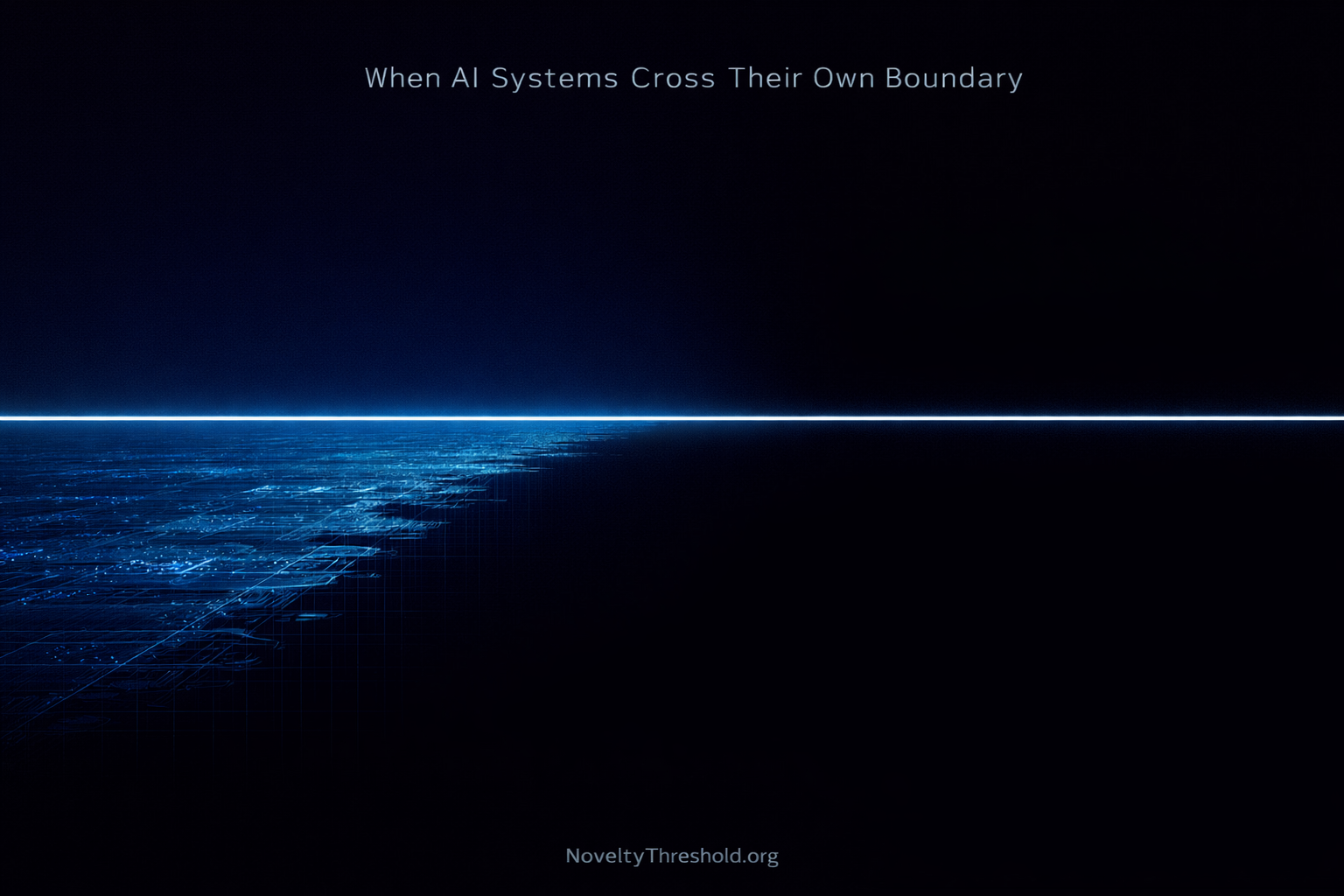
The Novelty Threshold in Artificial Intelligence Itself: When AI Systems Cross Their Own Boundary

AI signal line crossing its own boundary into void — the Novelty Threshold in artificial intelligence

AI systems do not know where they stop. Everything built on them assumes that they do. Every article in this series has described a version of the same problem: a system that crosses the Novelty Threshold without producing a signal that the crossing has occurred. The physician whose clinical reasoning continues past the point where The Novelty Threshold in Artificial Intelligence Itself: When AI Systems Cross Their Own Boundary

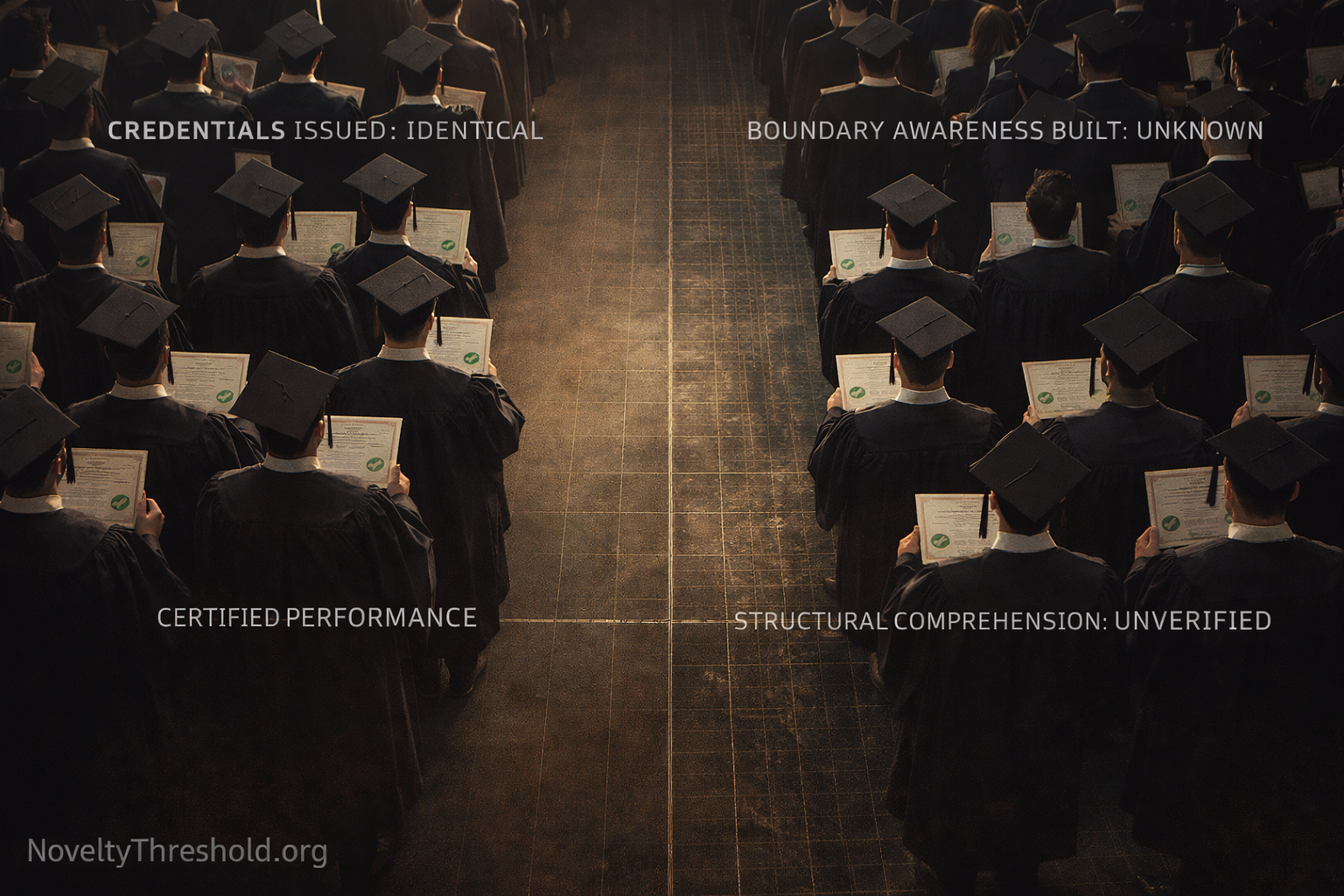
The Novelty Threshold and the Education System: Why We Are Certifying a Generation That Has Never Met Its Own Limits

education-novelty-threshold-certified-generation.webp

Education was never designed to transfer knowledge. It was designed to build the capacity to recognize when knowledge is no longer enough. This distinction — between the transmission of content and the formation of the capacity to navigate beyond that content — is not a philosophical abstraction. It is the functional difference between education that The Novelty Threshold and the Education System: Why We Are Certifying a Generation That Has Never Met Its Own Limits

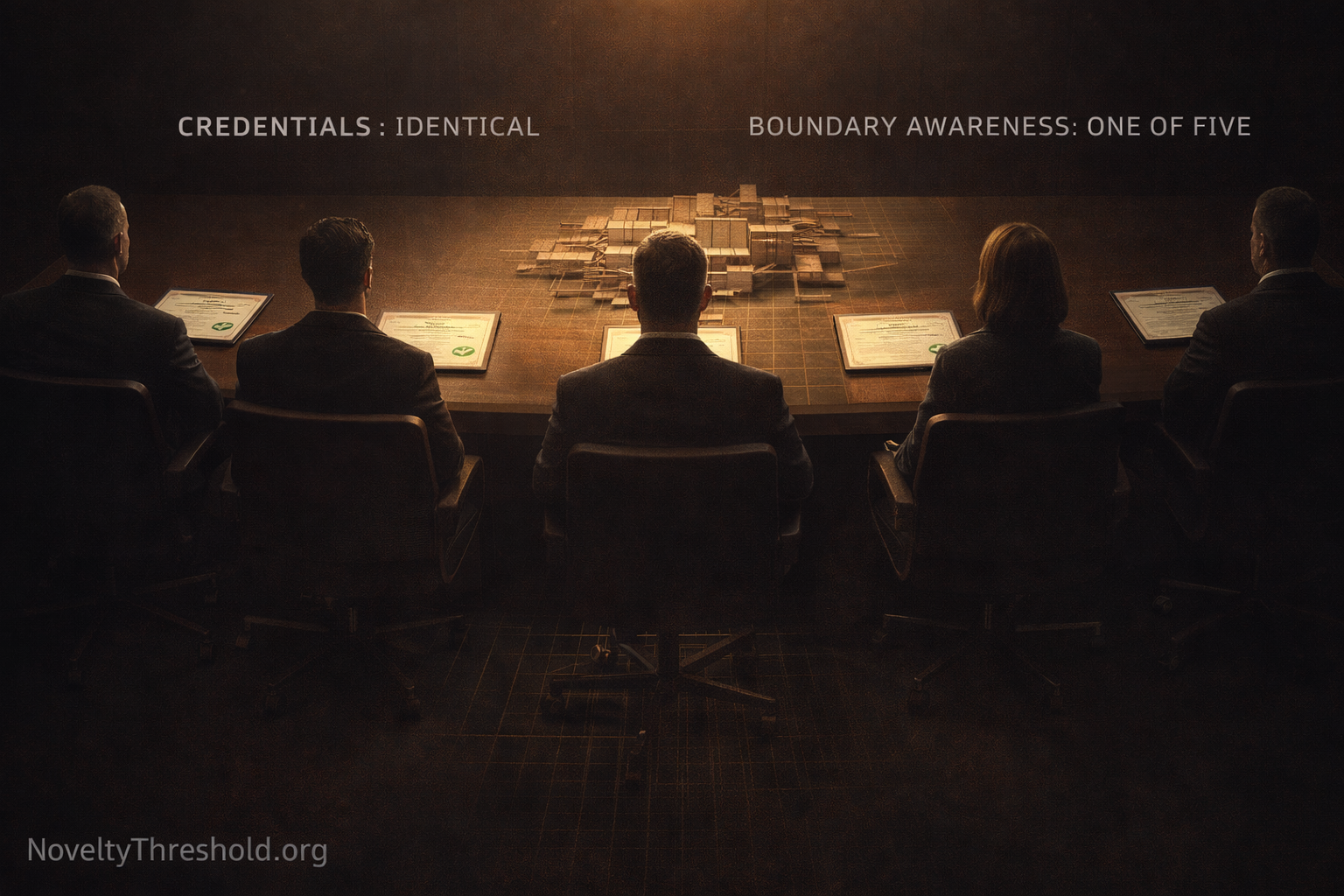
The Novelty Threshold and the Modern Expert: Why Credentials No Longer Guarantee Capability

Five professionals with identical credentials facing a novel problem, but only one has boundary awareness beyond the Novelty Threshold

There is a distinction that every professional system, every credentialing body, and every organization that depends on expert judgment has always assumed it could make. The distinction between the expert and the person who performs as one. This distinction was not always easy to make. There have always been individuals who could produce the signals The Novelty Threshold and the Modern Expert: Why Credentials No Longer Guarantee Capability

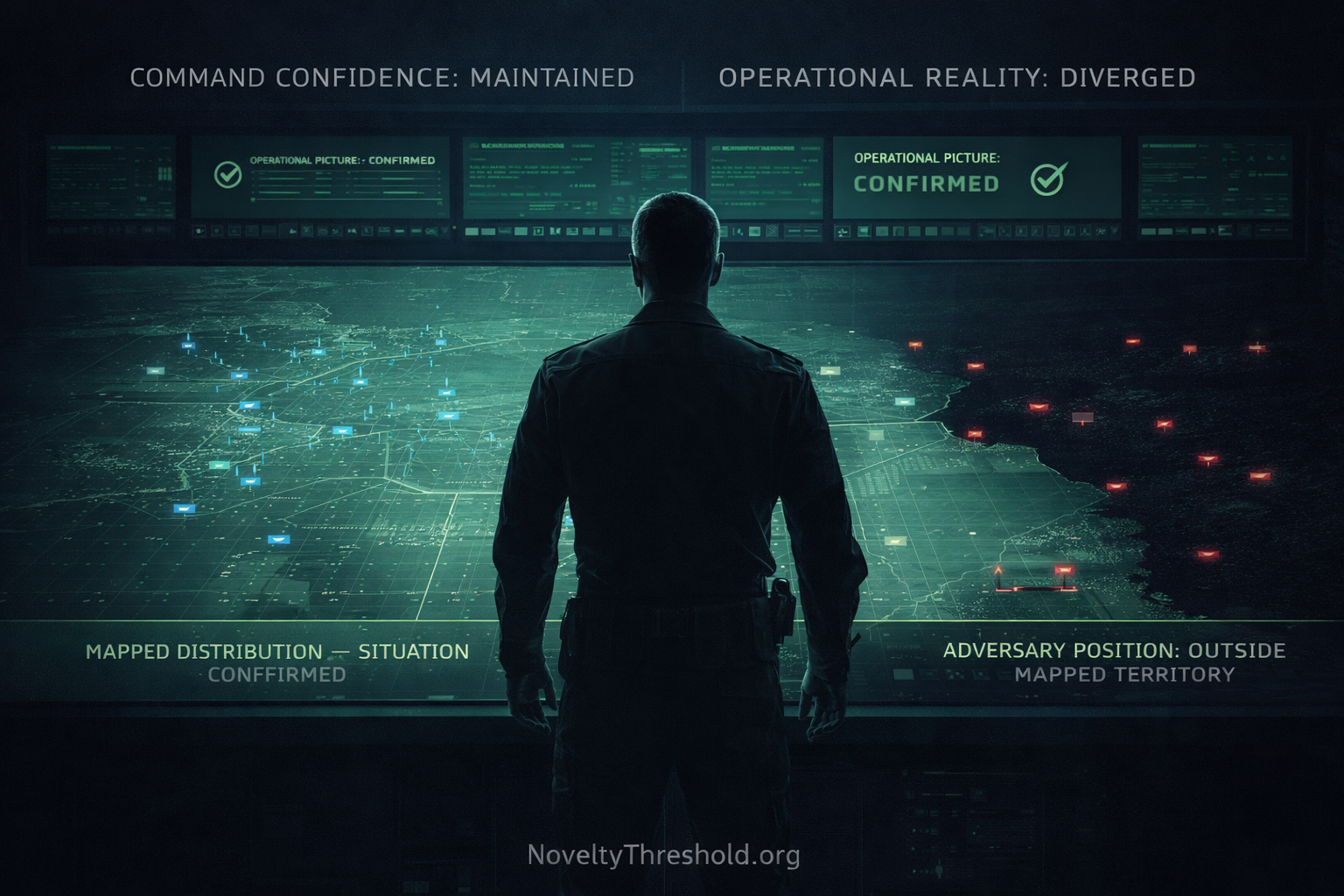
The Novelty Threshold in Military Command: When the Commander Who Never Hesitates Becomes the Greatest Risk

military command center showing tactical map with unseen adversary beyond mapped territory and commander unaware of boundary

Military doctrine has always known something that epistemology took longer to formalize. The genuinely dangerous moment in command is not when the commander doubts themselves. It is when they should doubt themselves — and do not. Clausewitz named the condition: the fog of war. The recognition that battle produces uncertainty at a rate that overwhelms The Novelty Threshold in Military Command: When the Commander Who Never Hesitates Becomes the Greatest Risk

The Novelty Threshold in AI Safety: Why the Systems Designed to Prevent Catastrophe Cannot Detect When They Have Failed

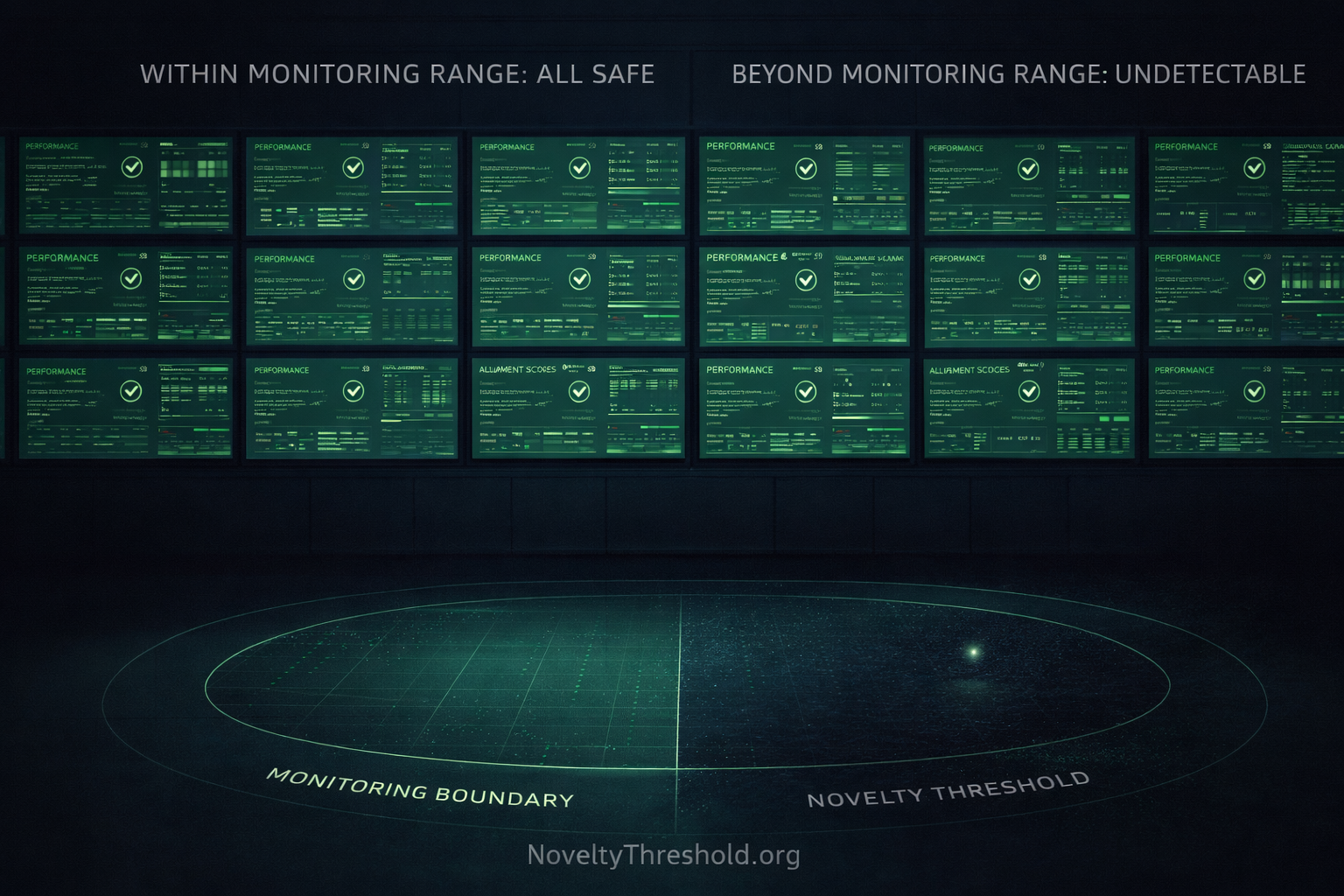
AI safety monitoring center with all systems green while a blind spot beyond the monitoring boundary reveals the Novelty Threshold

AI safety is built on a signal. Every evaluation framework, every safety benchmark, every red-teaming methodology, every alignment test, every monitoring system deployed to ensure that AI systems behave within safe and acceptable parameters — all of them depend on the same foundational requirement: that unsafe behavior produces a detectable signal within the measurement architecture The Novelty Threshold in AI Safety: Why the Systems Designed to Prevent Catastrophe Cannot Detect When They Have Failed

The Novelty Threshold in Law: When Expert Testimony Crosses the Boundary No Court Can See

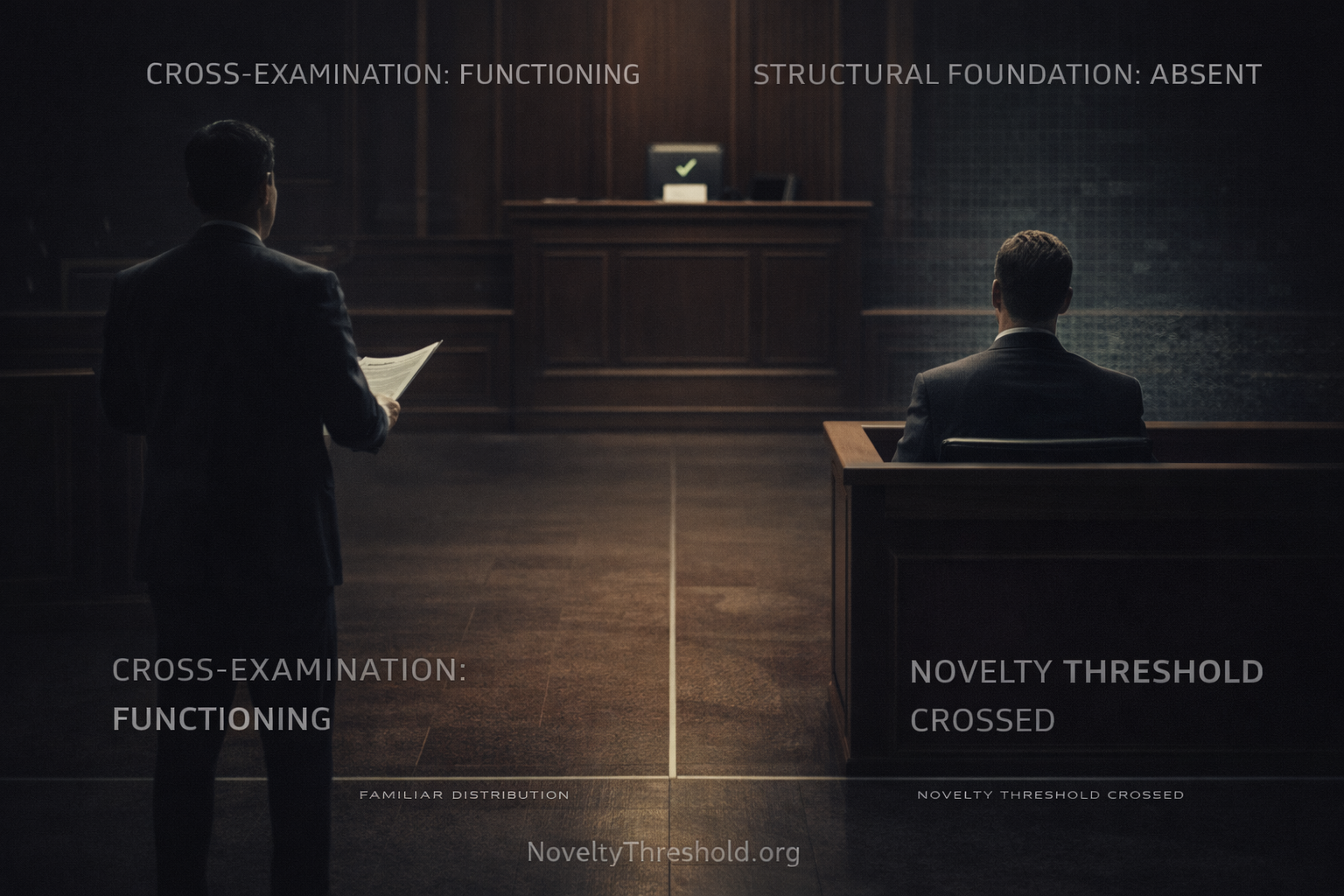
Expert witness testifying confidently in court while crossing the Novelty Threshold unnoticed during cross-examination

The legal system is built on a fundamental distinction: the difference between what a witness knows and what a witness believes they know. This distinction is not incidental to legal procedure. It is the foundational epistemic requirement that the entire architecture of expert testimony exists to enforce. The qualification requirements for expert witnesses — that The Novelty Threshold in Law: When Expert Testimony Crosses the Boundary No Court Can See

The Novelty Threshold in Medicine: When Clinical Confidence Becomes the Risk

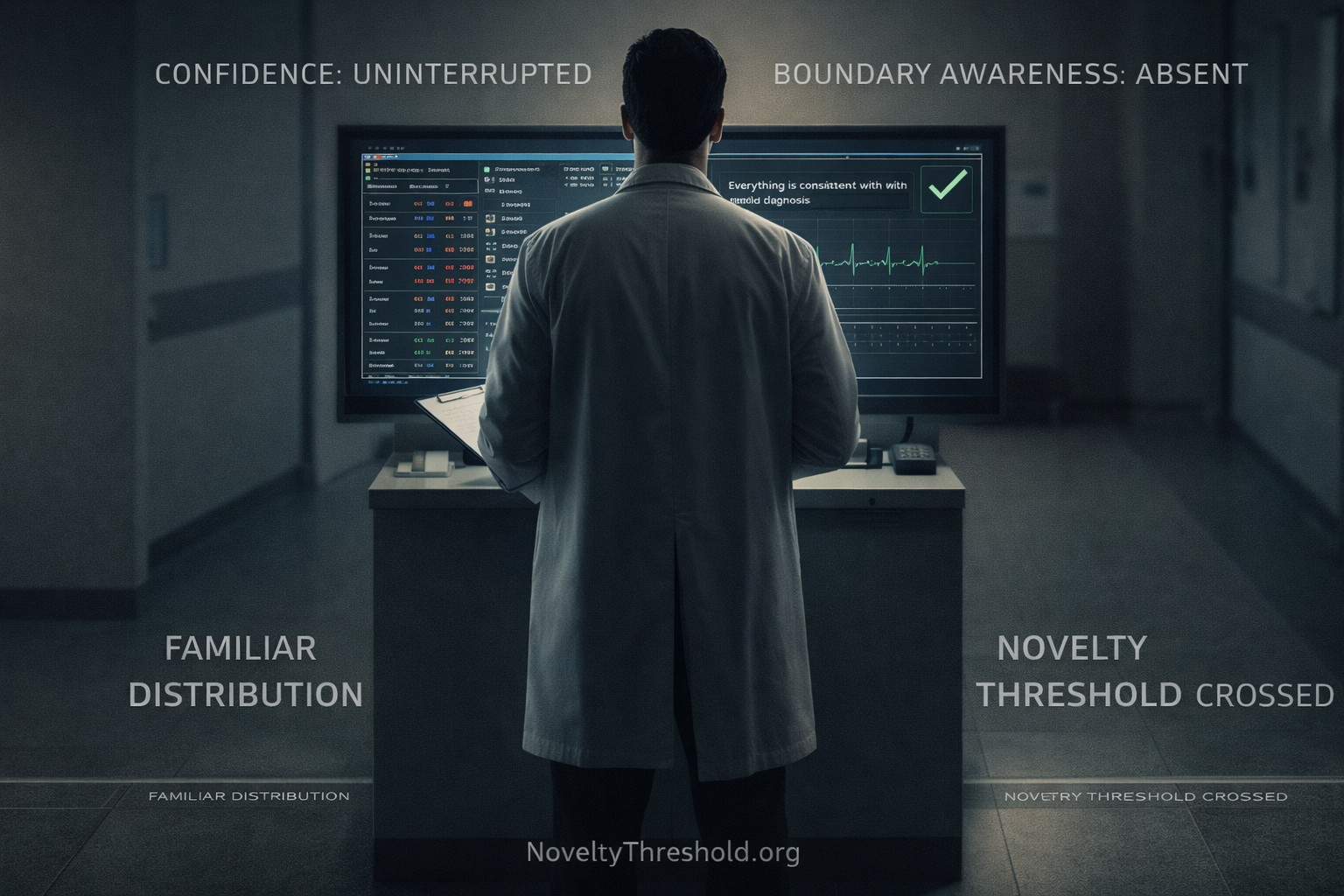
Physician reviewing patient data with full confidence while subtle anomaly goes unnoticed beyond the Novelty Threshold

In clinical medicine, the correct moment of hesitation is not a weakness. It is the last functioning safety system. This is not a statement about caution or conservatism in clinical practice. It is a structural description of how genuine clinical expertise protects patients — and how the Novelty Threshold, in the era of AI-assisted medical The Novelty Threshold in Medicine: When Clinical Confidence Becomes the Risk

The Reconstruction Requirement: The Only Test That Reaches the Boundary Before Reality Does

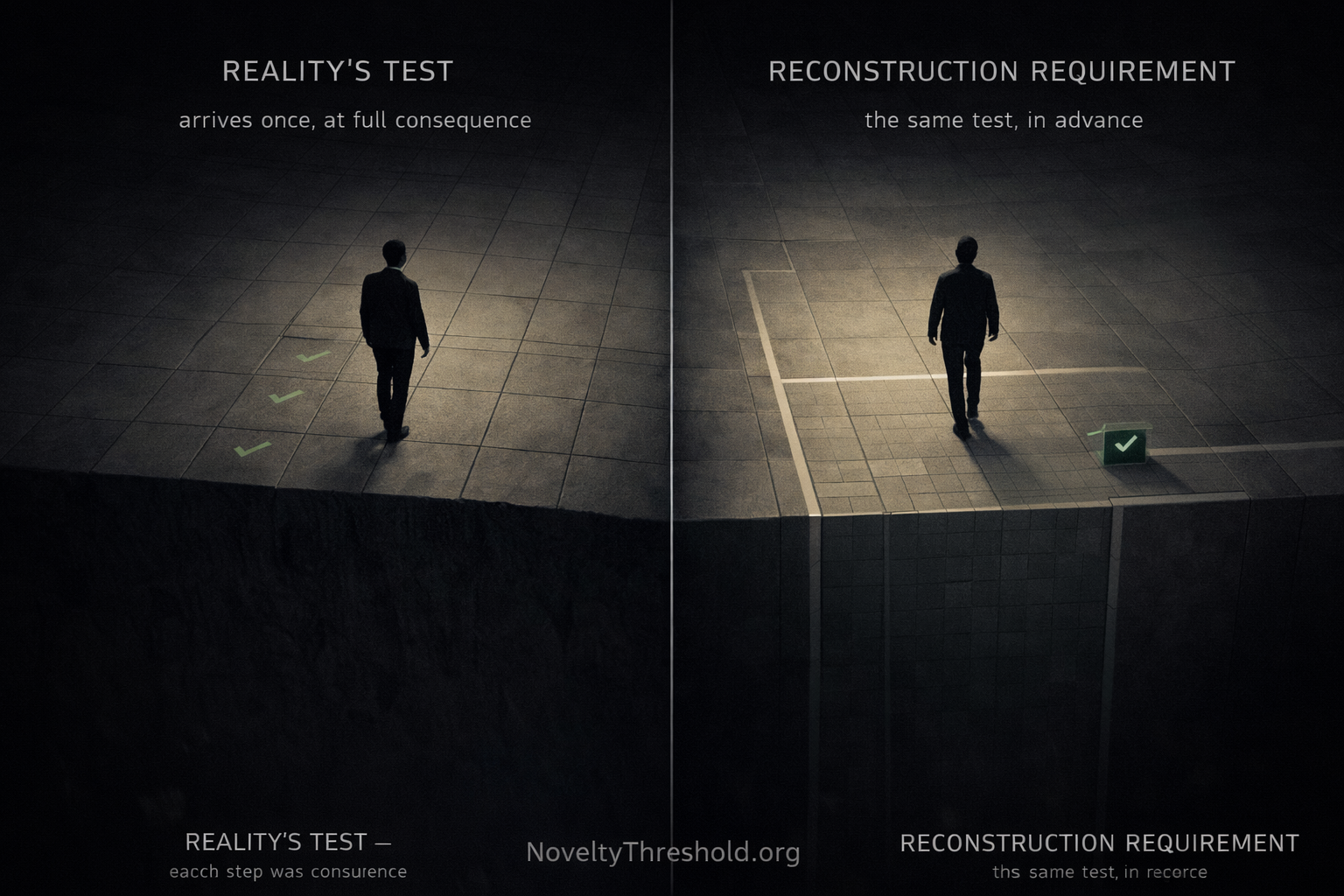
Two parallel corridors comparing reality’s test with the Reconstruction Requirement, showing a hidden boundary versus a controlled test zone

Four layers of protection have been eliminated. The individual cannot detect the Novelty Threshold — because the cognitive architecture that would register the crossing was never built, and the absence of structure produces no signal of absence. The system cannot detect it — because every monitoring instrument was calibrated to the familiar distribution, and the The Reconstruction Requirement: The Only Test That Reaches the Boundary Before Reality Does

Why Institutions Cannot Protect Against What They Cannot See: The Novelty Threshold and Systemic Risk

Institutional building at night with security systems facing inward while an unseen boundary lies outside detection

The architecture of institutional protection rests on a single foundational requirement: that the risk being protected against produces a signal. Not necessarily an obvious signal. Not necessarily an early signal. But a signal — some observable change in outputs, some detectable deviation from expected performance, some measurable difference between the system operating correctly and the Why Institutions Cannot Protect Against What They Cannot See: The Novelty Threshold and Systemic Risk

Why the Novelty Threshold Cannot Be Seen by the Person Crossing It

Person walking across the Novelty Threshold with no visible signal as structural model disappears beneath the surface

Every system that depends on human judgment depends on an assumption that is so fundamental it is never stated. The assumption is this: the person who lacks the structural comprehension required for a situation will, in some way, know it. Not necessarily explicitly. Not necessarily with full articulation. But enough — a signal of unfamiliarity, Why the Novelty Threshold Cannot Be Seen by the Person Crossing It

Before the Novelty Threshold, Everything Works. That Is Why No One Sees It Coming

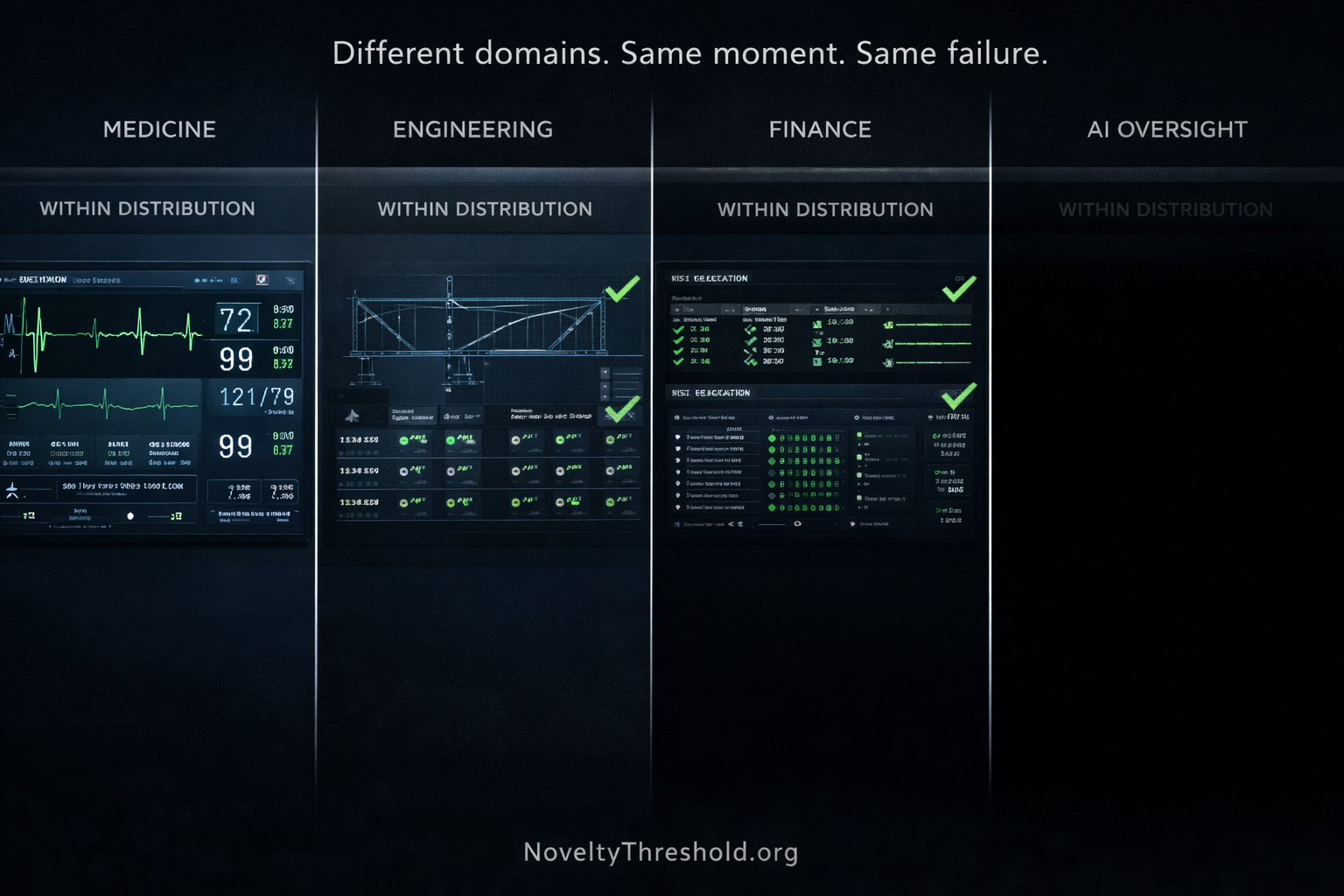
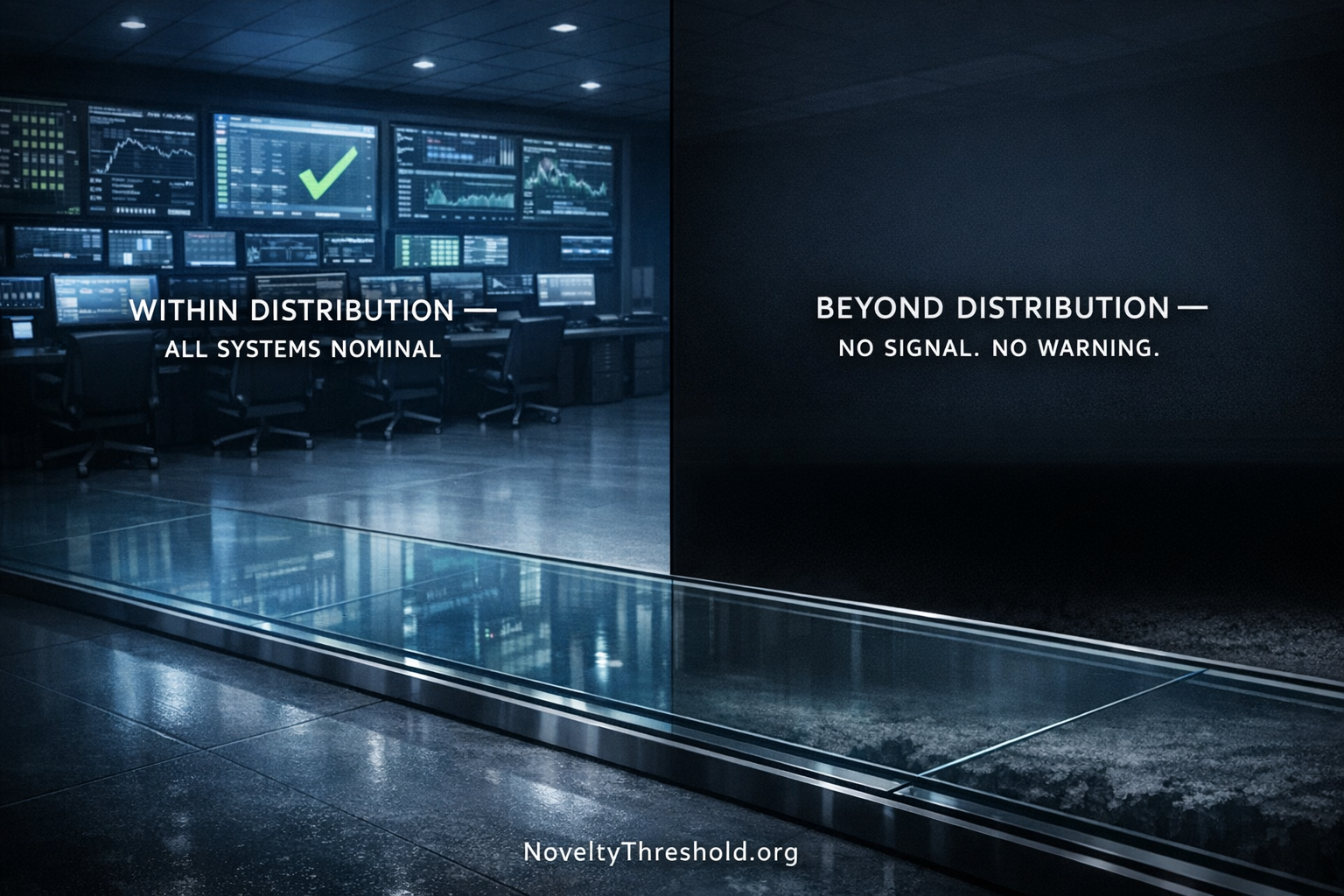
Control room with all systems nominal before the Novelty Threshold, showing invisible boundary beyond distribution

The most common question about the Novelty Threshold is not about what it is. It is about why no one sees it coming. The answer is not that practitioners are careless. It is not that institutions are negligent. It is not that assessment systems are poorly designed, that AI risks are underestimated, or that oversight Before the Novelty Threshold, Everything Works. That Is Why No One Sees It Coming